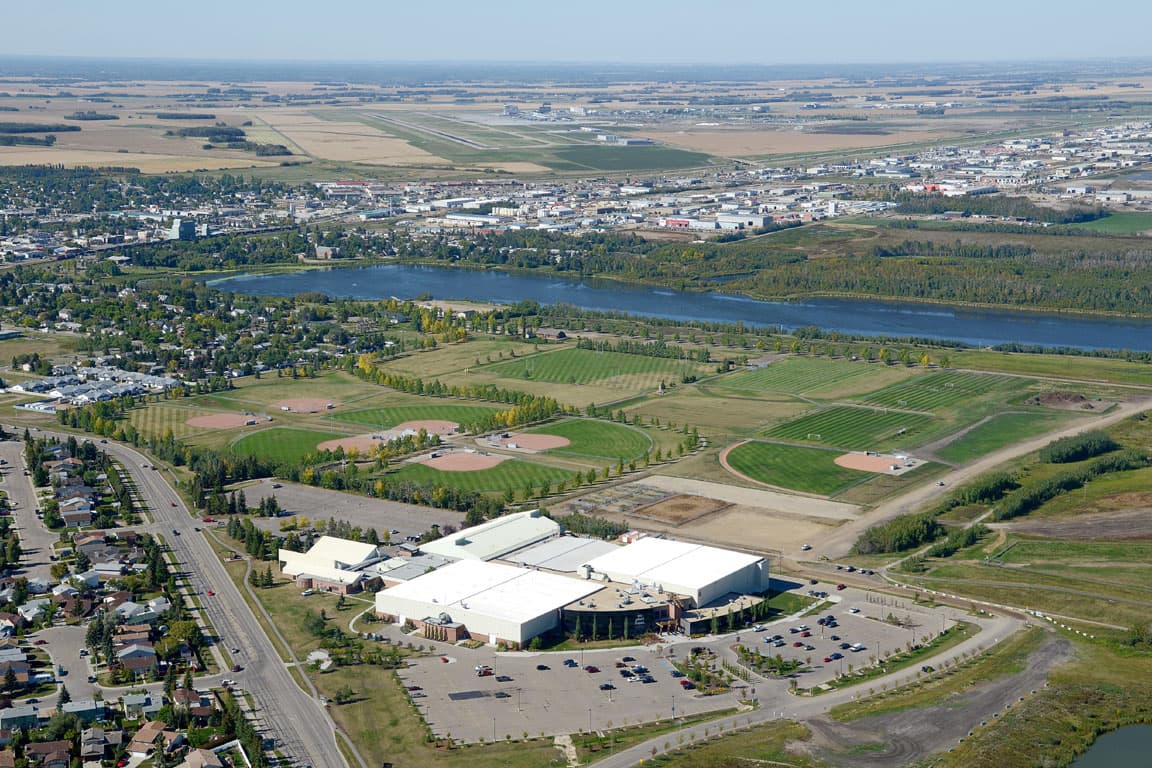

The City of Leduc is planning ahead to support growth over the next 50 years. As part of this work, and the annexation project, the City completed a Growth Management Study (GMS) in 2026. This study helps us understand how much Leduc is expected to grow, how much land is needed to support that growth, and where future growth can happen in a responsible, efficient way.
Why this study matters
Leduc has grown quickly over the past several decades, and that growth is continuing. The GMS confirms that growth is happening faster than previously expected, and that land within the current city boundary will not be enough to meet long-term needs.
Planning ahead helps the City provide housing, jobs, and services; use infrastructure efficiently; and avoid costly decisions in the future.
Highlights from the Growth Management Study
- Leduc could grow to approximately 138,000 residents and 74,000 jobs by 2077. This is roughly three times the current population.
- About one-third of land within the city is still undeveloped. At current growth rates, much of this land could be used within 25 years.
- Not all land can be developed. Some areas are protected (wetlands, environmental reserves, infrastructure corridors).
- To support growth over the next 50 years, Leduc will need 3,584 hectares of developable land. About 1,375 hectares are currently available within the city. This means the City needs an additional 2,209 hectares of developable land beyond current boundaries.
- The study establishes a GMS recommended annexation area that aligns with this long-term land need and is smaller / more refined than the area initially proposed.
Determining the GMS Recommended Annexation Area
The GMS recommended annexation area was selected to support efficient, orderly growth while minimizing long-term costs and impacts. It reflects where urban expansion makes the most sense based on servicing, transportation, environmental considerations, and existing development patterns.
The GMS will inform decisions around what annexation area the City ultimately includes in its annexation application, but no final decisions have been made yet.
Key reasons for the GMS recommended annexation area
- Allows for a logical and connected pattern of growth
- Supports jobs and long-term tax stability
- Efficient and affordable servicing in stages
- Few constraints and reduced impacts on agricultural / farmlands
- Meets near-term and long-term growth needs