Skip to Main Content

Project update: July 2026

What We Heard: Thoughtful balanced growth of Leduc neighbourhoods

Feedback from engagement sessions from March to May 2026 showed strong support for thoughtful, balanced growth of Leduc neighbourhoods.

  • Residents want more housing options, especially in growing areas, while also carefully integrating new housing types in established neighbourhoods to fit the existing neighbourhood scale and context.
  • Residents want parking that works for everyday life and prefer to keep current parking requirements in place.
  • Residents strongly support having more convenient and walkable places to gather and connect within neighbourhoods—like parks, recreation spaces, coffee shops, restaurants, shops and daycares.
  • Many residents support linking building size to street type and neighbourhood context to help new development blend in and feel consistent. They also agree with seeing taller buildings directed towards the Urban Centre to support the transition of building heights.
  • Developer and industry participants emphasized the importance of balancing flexibility and innovation with practical considerations related to infrastructure, market realities, and development certainty.

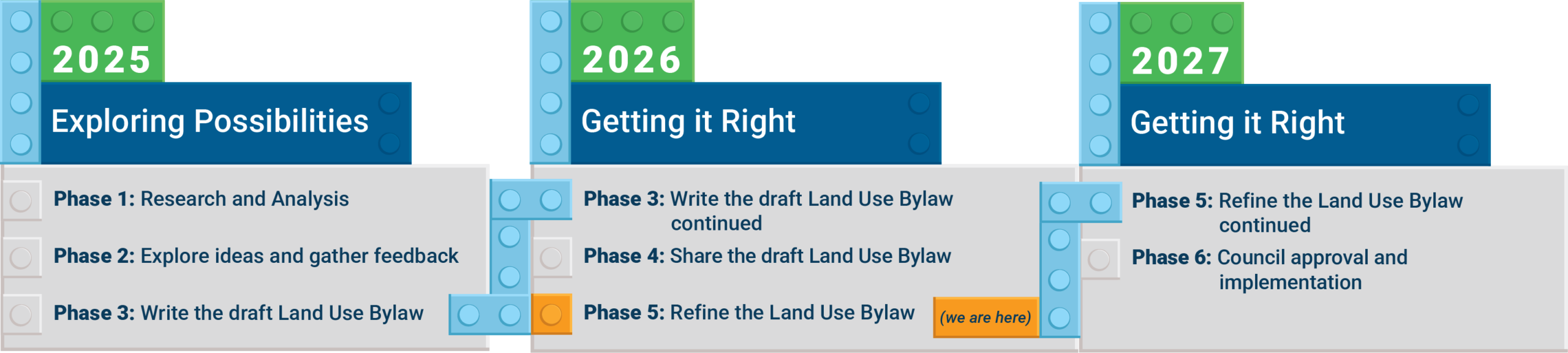
The feedback will help refine the next draft of the bylaw. The timeline has been extended into early 2027 to provide more opportunity for feedback on draft refinements.

Timeline

From November 2025 to January 2026, we explored how neighbourhoods could evolve and identified potential aspirations, priorities, and areas of focus for the renewed bylaw. Your feedback, along with technical studies and best practices, has helped shape the first draft of the Land Use Bylaw. Multiple engagement sessions were scheduled in April 2026 to receive public input.

If you missed the engagement events, catch up through the recording of the virtual session to learn about the new direction for the draft Land Use Bylaw, including key topics and proposed changes.

What We Heard: Renewed Land Use Bylaw Needs to Find Balance

Through the summer and fall of 2025, the project focused on exploring possibilities for a renewed Land Use Bylaw by listening to residents, landowners, developers, business and non-profit organizations. We listened during walking tours, at drop-in sessions and through an online survey about what should guide the next version of the bylaw. We asked what matters and what helps or hinders the way they live, work, and move through Leduc.

The key will be to find balance between what residents value most—green space, neighbourhood character, and livability—with industry’s call for clear, flexible rules that support housing choice and affordability. This renewal must also align with the City’s planning framework and best practice in land use planning, so growth is managed thoughtfully and predictably.

About the Project

The City of Leduc is working towards a renewed Land Use Bylaw. The Land Use Bylaw is the “rulebook” for the City, residents, businesses, developers, and builders to ensure the different ways land is used and categorized (zoned) are complementary and that development supports a functional, and livable community.

The renewed Land Use Bylaw will become one of the main tools for actioning the City’s Municipal Development Plan (MDP) vision of a vibrant and thriving Leduc. This project will extend into 2026 with many opportunities for the public to get involved—to provide ideas, concerns, and hopes for the future.

Why this matters to you

Whether you’re a homeowner, renter, business owner, builder, developer, or simply someone who cares about how your community grows—land use rules affect you. It will define:

  • Where you can build a new garage or garden suite
  • Whether a coffee shop, retail store, or other type of business can open down the street
  • How your neighbourhood evolves and modernizes
  • What types of housing can be built in your neighbourhood
  • The size of the area needed to buffer between residential from commercial and industrial lands

Your voice is important in shaping the updated bylaw. Subscribe to the email list for details on upcoming events and ways to participate.

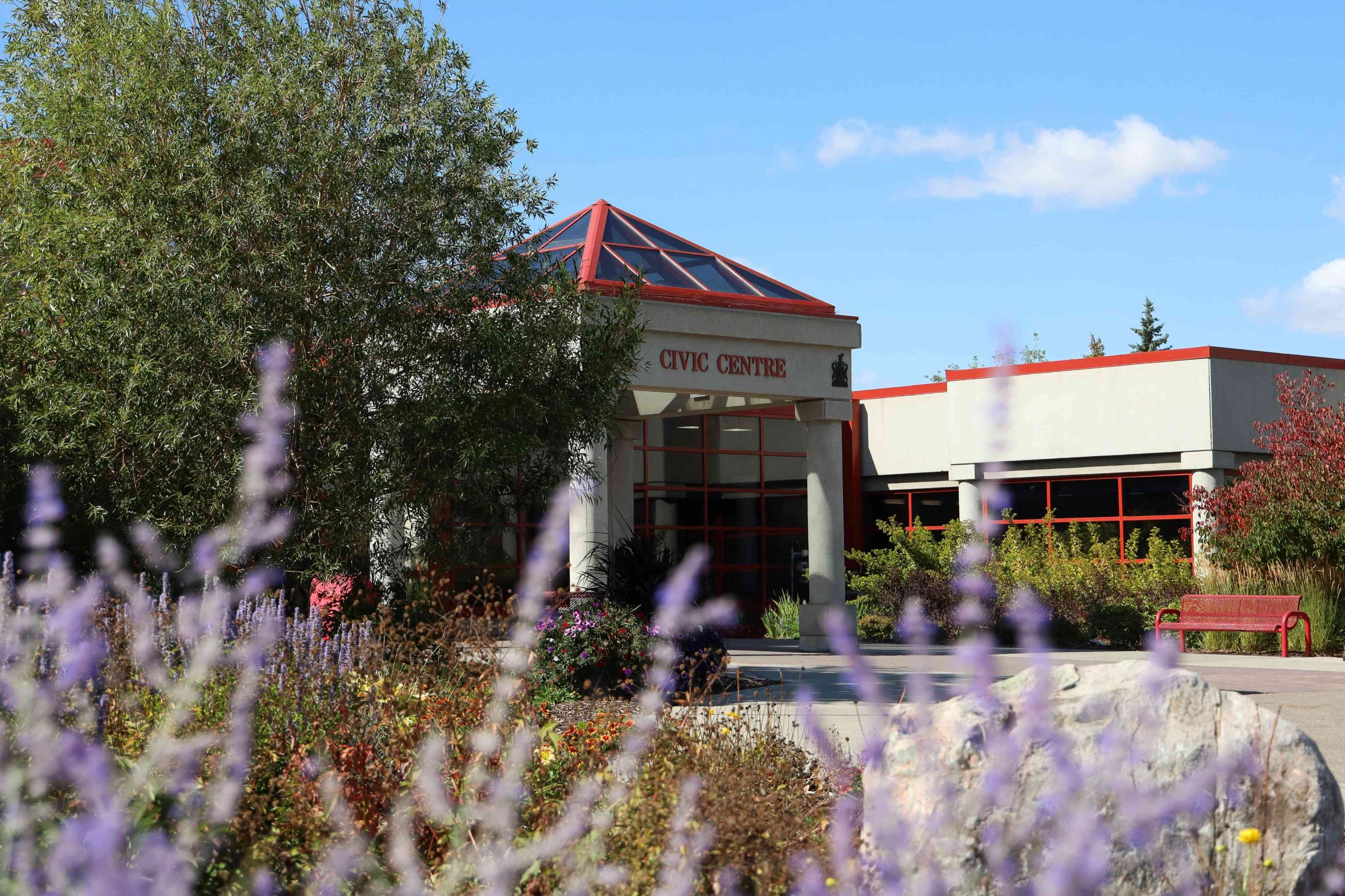
Civic Centre building with a red-trimmed roof, surrounded by trees and purple flowers under a clear blue sky.

What is a Land Use Bylaw

A land use bylaw outlines specific rules to regulate how properties can be used and developed with land uses grouped into categories. These categories are referred to as “land use districts (zones)”—such as residential, commercial, industrial, or mixed-use— and they set standards for things like property lot sizes, where buildings can be placed, how tall, what size, and how many buildings can be built in addition to landscaping, signage, and parking.

Note: the terms— zoning and districting—are often used interchangeably in the context of how land is used and developed within a community.

A well-designed land use bylaw can:

  • Allow for thoughtful evolution of mature neighborhoods
  • Support economic development by clearly outlining development expectations
  • Allow for a range of housing types and the number of homes in an area to meet the needs of different household sizes, life stages and income levels.
  • Improve public health and safety by regulating where certain activities can take place to reduce conflicts and ensure safe, healthy environments.

Why are we updating the Land Use Bylaw?

Our current Land Use Bylaw was adopted in 2013, and while it is updated regularly, our community has grown and changed—and so have our needs. The renewal is an opportunity to modernize our approach to land use, simplify regulations, and support balanced growth across our community. The renewal is necessary to:

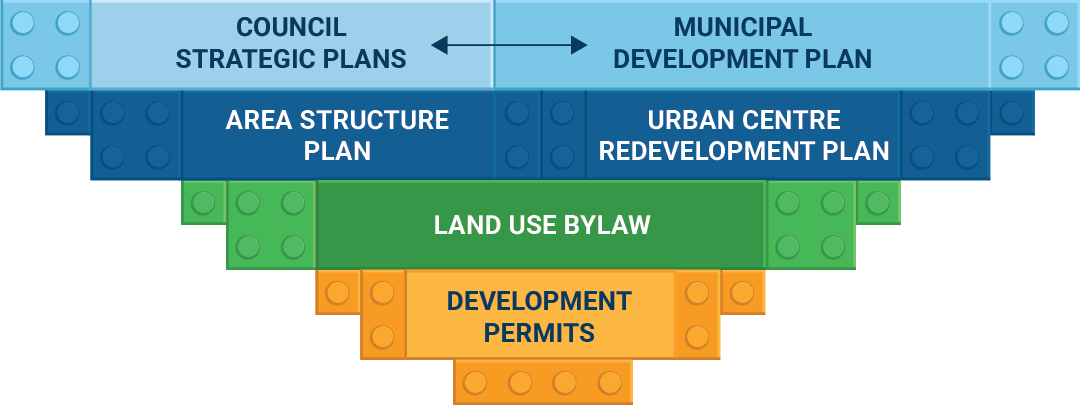
Land Use Bylaw Planning Hierarchy for the City of Leduc

Get Involved

We’re committed to a transparent and inclusive process. There will be many opportunities for community input.

Stay informed and have your say by subscribing to the email list for more details on upcoming events and ways to participate.

If you have questions about the project, contact us at [email protected].